Turn Trend Signals Into a Validated Business Idea MVP

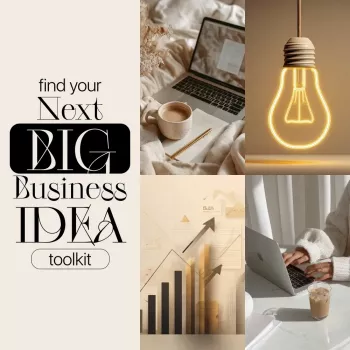
Find Your Next Big Business Idea Toolkit: From Trend Signals to a Validated MVP
Big ideas rarely appear fully formed. They usually start as small signals: a new habit spreading through a community, an emerging niche on a marketplace, or an overlooked frustration buried in reviews. The advantage comes from turning those signals into a structured pipeline—spot trends early, identify the market gap, validate demand with real behavior, run MVP tests that create commitment, and score ideas so the best option rises to the top.
What this toolkit helps accomplish
A strong business idea process does two things at once: it generates options and it quickly eliminates weak ones. A practical toolkit helps you:
- Turn scattered inspiration into a repeatable idea-finding workflow
- Translate trends into specific customer problems worth solving
- Reduce risk by validating demand before investing heavily
- Run lightweight MVP tests to learn what people will actually buy
- Compare multiple ideas with an objective scorecard instead of gut feel
If you want a guided, start-to-finish system you can reuse, see Find Your Next Big Business Idea Toolkit – Trendspotting, Market Gaps, Validation, MVP Tests & Idea Scorecard (Ebook).
Trendspotting: finding signals early without getting distracted
The goal of trendspotting isn’t to chase novelty—it’s to notice consistent growth and shifting behavior before the market feels crowded. A simple way to avoid getting pulled into temporary hype is to require repeated evidence from multiple sources.
- Separate “trend” from “temporary hype” by looking for consistent growth, not one-off spikes
- Use customer-language mining: recurring phrases in reviews, forums, app comments, and support threads
- Track adjacent industries for spillover opportunities (tools, services, accessories, education)
- Create a simple trend log: signal source, who it affects, what pain it implies, and the “why now” driver
For quantitative trend context, Google Trends can help confirm whether interest is compounding over time or just peaking briefly.
Trend signal checklist
| Signal | Where to look | What to capture | What it can lead to |
|---|---|---|---|
| Recurring complaints | Product reviews, Reddit, app stores | Exact wording + frequency | A pain-based product or service |
| New behaviors | TikTok/YouTube, newsletters, communities | Who is doing it and why | A tool, template, or workflow offer |
| Category expansion | Amazon categories, marketplaces | New sub-categories appearing | A niche brand or bundle |
| Regulatory/tech shifts | Government sites, major tech releases | What becomes easier/harder | Compliance support or migration services |
Market gaps: turning observations into a clear opportunity statement
Signals become opportunities when they’re translated into a specific customer and a specific moment of need. Instead of “AI for creators,” the sharper version is “short-form video editors who need consistent hooks daily and can’t keep up with ideation.”
- Define the customer and context: who is struggling, when, and what triggers the need
- Map the current alternatives: DIY, competitors, substitutes, “do nothing”
- Look for gap patterns: too expensive, too complex, missing a key feature, poor onboarding, weak niche fit
- Write a one-sentence gap statement: “For [customer], [current option] fails because [reason], so they need [outcome].”
If you want a reality check on competitive analysis basics, the U.S. Small Business Administration’s market research and competitive analysis guide is a solid reference for organizing what you find.
Validation: proving demand before building
Validation is where “interesting” becomes “worth pursuing.” The objective is to confirm the pain is real and frequent—and that people will take a meaningful action to solve it.
Fast validation methods and what they reveal
| Method | Time to run | What it validates | Best for |
|---|---|---|---|
| Landing page + ads | 2–7 days | Message-market fit and demand strength | Consumer and prosumer ideas |
| Outbound outreach | 1–5 days | Pain intensity and buying process | B2B services, software, retainers |
| Waitlist with price shown | 2–10 days | Willingness to pay directionally | New products, courses, digital tools |
| Paid pilot | 1–4 weeks | Real-world delivery + retention | Service offers and high-touch MVPs |
For a practical framing of what “minimum viable” really means, Harvard Business Review’s refresher on MVP is a helpful reminder: the MVP is about learning efficiently, not building a smaller version of the final product.
MVP tests: learning loops that don’t require full build-out
If execution momentum is the bottleneck once you’ve picked an idea, pair the ideation sprint with Finally Focused: The Anti-Procrastination Workbook – Productivity Ebook & Focus-Building Guide with Time Management Tools to maintain consistency during outreach, testing, and iteration.
Idea scorecard: choosing what to pursue with less second-guessing
Once you’re running pilots and collecting payments, cleaner personal cash flow tracking can reduce stress and improve decision-making. Budgeting Like a Pro: Complete eBook – Personal Finance Planner, Zero-Based Budgeting, 50/30/20, Pay-Yourself-First, Debt Payoff & Savings Plan is a useful companion for separating business experiments from personal expenses.
What’s inside the ebook and how to use it in a 7-day sprint
Who it fits best (and when to wait)
FAQ
How is this different from brainstorming business ideas?
Brainstorming generates options, but this approach ranks and filters them using evidence: trend signals, market gaps, validation steps, MVP tests, and a scorecard. The result is less guessing and more measurable learning from real customer actions.
What’s a good MVP test if building software is not an option?
Concierge MVPs, paid pilots, and service-first delivery work well because they validate outcomes before automation. A simple landing-page pre-order or prototype demo can also test commitment-based metrics rather than opinions.
How many ideas should be tested before choosing one?
Starting with three candidates is usually enough: run quick validation for each, then use a scorecard to pick the winner. A few focused tests tend to produce clearer signals than many shallow experiments.











Leave a comment