Modern Etiquette: Texting, Social Media, RSVPs Made Simple

Modern Etiquette Made Easy: Small Habits for Texting, Social Media, RSVPs, and Everyday Politeness
Modern manners aren’t about being formal—they’re about making other people feel respected in fast, everyday moments. From quick texts to group chats, social posts, and invitations that need an RSVP, a few clear habits can prevent awkwardness, reduce misunderstandings, and strengthen relationships at home, work, and online.
Why etiquette feels harder now (and why it matters more)
Etiquette used to be guided by slower channels and clearer settings (a letter, a phone call, a dinner party). Now, most communication arrives without tone of voice or facial cues—so small choices like timing, wording, punctuation, and emojis can change how a message lands.
Speed also creates pressure. Instant messaging can quietly train people to expect instant answers, even when that’s unreasonable or disruptive. Meanwhile, screens blur boundaries: personal and professional conversations often happen in the same apps, at the same hours, in the same tone.
Good etiquette protects relationships by reducing ambiguity. When people know where they stand, what to expect, and how to respond, there’s less room for resentment and more room for trust. For a useful grounding in professional expectations, the Emily Post Institute’s business etiquette guidance is a solid reference point.
Texting etiquette micro-habits that prevent misunderstandings
Texting works best when it’s treated as lightweight, not careless. These micro-habits keep messages clear without making them stiff.
- Start with clarity: open with the point (question, request, or update) before adding details—especially when timing matters.
- Use a considerate response window: if a message requires action, acknowledge it even if the full answer comes later (example: “Got it—will confirm by 3pm.”).
- Match urgency to channel: if something is truly urgent, call—don’t send multiple escalating texts.
- Avoid “drive-by” demands: add context and a reasonable deadline (example: “Could you send the file by tomorrow at noon?”).
- Respect group chats: keep side conversations off the main thread, and don’t add new people without a quick heads-up on why they’re included.
- Tone-check before sending: reread for unintended sharpness; short messages can sound curt without a greeting or softener.
- Follow up politely: one nudge is fine; repeated pings can feel controlling. If there’s still no response, switch methods or set a clear decision point.
Quick fixes for common texting moments
| Situation | What to do | Why it works |
|---|---|---|
| No reply yet | Send one brief follow-up after a reasonable wait; include the deadline | Respects the other person’s time while keeping plans moving |
| Need a favor | Ask once, give context, make it easy to say no | Reduces pressure and increases goodwill |
| Correcting someone | Move to private message and keep it factual | Protects dignity and prevents pile-ons |
| Misunderstanding | Assume good intent; clarify with one direct question | De-escalates and gets to the real issue |
| Ending a thread | Close with a clear next step or thanks | Avoids lingering uncertainty |
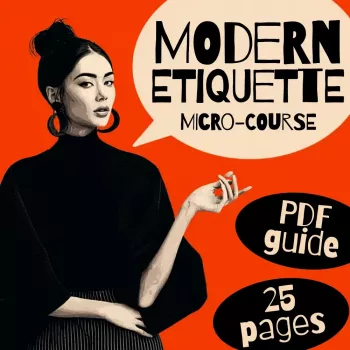
If you want ready-to-use wording (polite declines, follow-ups, RSVP replies) that you can reference in the moment, Modern Etiquette Micro-Course | Printable Digital Etiquette Guide keeps the essentials in one place—simple, printable, and built for real-life situations.
Social media etiquette: respect, privacy, and the “public forever” effect
Social platforms feel casual, but the stakes can be surprisingly high—because content travels, screenshots exist, and audiences overlap. Research on how widely social media is used underscores why “you never know who will see it” is practical, not paranoid; see the Pew Research Center’s social media coverage for helpful context.
- Ask before tagging: some people have privacy, safety, or professional reasons for limiting visibility.
- Think before posting others: get consent for photos of friends’ kids, parties, or sensitive situations; default to private sharing when unsure.
- Credit creators: use proper attribution when reposting, and avoid removing watermarks.
- Avoid public call-outs as a first move: if a direct message can solve it, start there.
- Keep comments constructive: critique ideas without attacking the person; if emotions are high, pause before responding.
- Remember audience overlap: coworkers, family, and friends can all see the same content; choose captions and jokes accordingly.
RSVP etiquette: the fastest way to be considered reliable
Everyday politeness that actually saves time
Etiquette also gets easier when you have the mental bandwidth to follow through. If your biggest barrier is procrastination or missed deadlines (which can ripple into late replies and last-minute RSVP changes), Finally Focused: The Anti-Procrastination Workbook can help build routines that support dependable communication.
A simple way to build etiquette into daily life
Printable micro-course for fast, practical etiquette
The Modern Etiquette Micro-Course | Printable Digital Etiquette Guide | Texting, Social Media, RSVPs & Everyday Politeness Tips is designed for quick wins: clear guidance you can reference in the moment, not memorize. It’s useful for adults, teens, students, and professionals who want confident wording, better boundaries, and fewer awkward exchanges—and it works well as a personal refresh or a thoughtful digital gift.
FAQ
How long is a reasonable time to respond to a text?
For casual messages, a few hours (or by the end of the day) is usually fine. If the text is time-sensitive or requires action, send a quick acknowledgment and a realistic time you’ll follow up; truly urgent matters are better handled with a call.
Is it rude to leave someone on read?
Not always—if no response is required, it can be harmless. But if someone asked a question, is making plans, or shared something emotional, a brief reply or acknowledgment maintains goodwill and prevents unnecessary worry.
What should an RSVP message include if the invitation is informal?
Keep it clear: say yes or no, confirm how many people are coming (if relevant), and note any dietary needs if the host asked. Add a quick thank-you, and let them know you’ll message promptly if anything changes.








Leave a comment